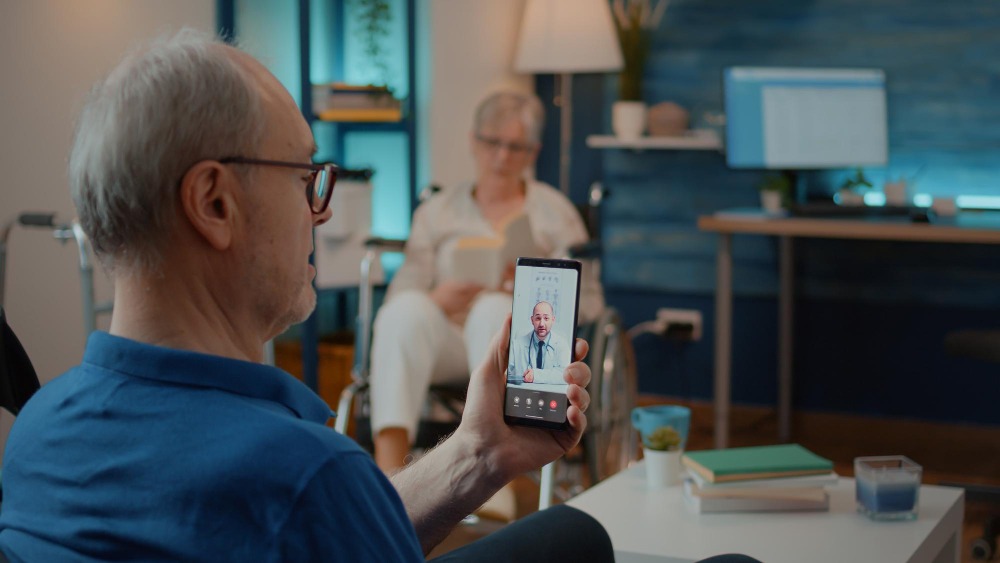

On-demand telemedicine helps clinics extend access beyond their regular schedule by connecting patients with licensed healthcare providers through virtual consultations. It can reduce patient wait times, support faster clinical evaluations and allow appropriate prescriptions to be sent to a pharmacy or delivered directly to the patient.
For med spas, wellness clinics and other growing healthcare businesses, this approach creates a practical alternative to keeping an internal provider available throughout every opening hour. The clinic can respond to patient needs more quickly without relying exclusively on in-person appointments or adding a full after-hours medical team.
What is on-demand telemedicine?
On-demand telemedicine is a model of virtual care in which patients can request access to a healthcare provider without waiting for a traditional in-office appointment. Depending on the service and applicable regulations, the consultation may take place through live video, audio or an asynchronous medical questionnaire reviewed by a licensed provider.
On-demand does not necessarily mean 24/7 availability, and it should not be confused with emergency care. It means that patients can be connected with an appropriate provider within an extended service window, often on the same day and with considerably less scheduling friction.
Qualiphy’s on-demand telemedicine solutions connect patients with healthcare providers for consultations, diagnosis, treatment plans and prescriptions related to services such as weight management, urinary tract infections, hair loss, erectile dysfunction, vitality and general wellness.
Why after-hours access matters for clinics
Patients do not always search for treatment during a clinic’s normal operating hours. They may complete a weight-loss inquiry in the evening, decide to book an aesthetic treatment over the weekend or need a prescription-related consultation when the clinic’s usual provider is unavailable.
If the patient has to wait several days for a response, the clinic risks losing the appointment to another provider. Delays can also interrupt treatment onboarding, prescription fulfillment and follow-up care.
Traditional solutions often require the clinic to:
- Extend staff schedules
- Hire additional providers
- Pay for on-call coverage
- Limit appointments to specific provider days
- Ask patients to return at another time
- Coordinate consultations manually by phone or email
On-demand telemedicine gives clinics another option. A qualified request can be routed into a virtual clinical workflow even when the clinic’s primary provider is not immediately available.
How on-demand telemedicine reduces patient wait times
1. Patients can begin the process immediately
A digital intake form allows patients to provide their health history, medications, symptoms and treatment goals without waiting for a staff member to call them.
This does not replace a provider’s clinical judgment. It gives the provider relevant information before the consultation begins and reduces time spent collecting routine details during the appointment.
2. Requests can be routed to available providers
In a traditional clinic model, patients may depend on the schedule of one physician, nurse practitioner or physician assistant. When that provider is unavailable, the entire patient journey can stop.
An on-demand telemedicine network can route eligible requests to an available provider who holds the appropriate credentials and is legally permitted to evaluate the patient in their location. This creates a more flexible coverage model and reduces dependence on one person’s schedule.
3. Suitable consultations move outside the physical clinic
Not every part of a treatment pathway needs to take place in a treatment room. Initial medical evaluations, medication consultations, follow-up appointments and certain pre-treatment assessments may be completed remotely when clinically appropriate and legally permitted.
Moving these steps online can free in-person capacity for procedures that require physical attendance. The result is not only a shorter virtual queue, but potentially a more efficient in-clinic schedule.
4. Prescriptions can enter fulfillment sooner
Waiting for a consultation can delay every stage that follows it. Once an evaluation has been completed and a provider determines that treatment is appropriate, the prescription can be routed electronically to a selected pharmacy.
Qualiphy also offers a direct-shipping option in which the consultation, prescription, medication and delivery are coordinated in one workflow. Alternatively, the prescription can be sent through the Surescripts network to a pharmacy selected by the clinic or patient.
These options reduce the number of manual handoffs between consultation and fulfillment.
5. Patients can access care seven days a week
Weekend and extended-hours availability can be particularly valuable for clinics whose patients make healthcare decisions outside the conventional workday.
Qualiphy provides telemedicine access seven days a week, allowing participating clinics to continue processing appropriate patient requests when their usual clinical team may not be available. This can help prevent Monday-morning backlogs and keep treatment onboarding moving throughout the week.
Which clinics can benefit from after-hours telemedicine?
On-demand telemedicine can support several types of healthcare and wellness businesses.
| Clinic or service type | Potential virtual-care use |
| Med spas | Good Faith Exams, pre-treatment assessments and follow-ups |
| Weight-loss clinics | Initial evaluations, GLP-1 consultations and ongoing monitoring |
| IV therapy clinics | Patient-specific evaluations and treatment orders |
| Hair-restoration clinics | Hair-loss assessments and prescription consultations |
| Wellness clinics | Vitality, sexual health and wellness evaluations |
| Urgent care services | Evaluation of appropriate non-emergency conditions |
| Multi-location practices | Additional provider coverage across locations |
Qualiphy’s guide to the top on-demand telemedicine services in the United States describes how virtual care is being used across urgent care, aesthetic medicine, metabolic health, dermatology, sexual health and wellness services.
What should an after-hours telemedicine workflow include?
Technology alone does not automatically create a faster patient experience. The clinic should define a complete workflow covering:
- How the patient requests a consultation
- What medical information must be collected
- How urgent and non-urgent requests are distinguished
- Which provider receives the case
- How the patient’s identity and location are verified
- Where consultation records are stored
- How prescriptions or treatment orders are issued
- How the clinic receives the outcome
- Who manages follow-up questions
- What happens when the patient is not suitable for virtual treatment
The U.S. Department of Health and Human Services recommends mapping every stage of the patient-provider interaction when developing a direct-to-consumer telehealth workflow. A clear process helps prevent the administrative bottlenecks that telemedicine is intended to remove.
What clinics should evaluate before choosing a platform
A clinic considering on-demand telemedicine should ask potential partners about:
- Average provider assignment and consultation times
- Provider availability during evenings and weekends
- State-by-state provider coverage
- HIPAA-compliant communication and data handling
- Synchronous and asynchronous consultation options
- Treatment-specific medical questionnaires
- Prescription and pharmacy integrations
- Direct-to-patient medication shipping
- Good Faith Exam and patient-specific order workflows
- Integration with the clinic’s website and existing systems
- Subscription, setup and per-consultation fees
- Escalation procedures for patients who need in-person or emergency care
Clinics should also clarify where the platform’s responsibility ends and where their internal team must take over.
How to measure whether telemedicine is reducing wait times
After implementation, clinics should monitor more than the total number of virtual consultations. Useful performance indicators include:
- Time from patient request to provider assignment
- Time from intake completion to consultation
- Consultation completion rate
- Patient abandonment rate
- Time from approval to prescription routing
- Number of requests completed outside standard hours
- Percentage of cases requiring manual staff intervention
- Patient satisfaction after virtual consultations
- Conversion from consultation to treatment
- Follow-up and patient-retention rates
These metrics reveal whether telemedicine is genuinely improving access or simply moving delays from one stage of the patient journey to another.
Frequently asked questions
Can on-demand telemedicine replace an in-house provider?
It can supplement an internal medical team, but whether it can replace certain responsibilities depends on the clinic’s services, staffing model and state regulations. Many clinics use on-demand telemedicine for additional coverage, patient evaluations and after-hours consultations.
Is on-demand telemedicine available 24/7?
Not always. Availability varies by platform. Clinics should verify the exact operating hours, weekend coverage and expected response times before selecting a service.
Can prescriptions be issued during an after-hours consultation?
A licensed provider may issue a prescription when it is clinically appropriate and legally permitted. The prescription can then be routed to a pharmacy or fulfilled through an available direct-shipping service.
What happens if a patient needs emergency care?
On-demand telemedicine is not a replacement for emergency services. Platforms and clinics should have clear escalation procedures directing patients to emergency care when symptoms fall outside the scope of virtual treatment.
Can on-demand telemedicine reduce staffing costs?
It may reduce the need to schedule additional in-house provider coverage for every extended hour. The actual savings depend on consultation volume, platform pricing, existing staffing and the amount of administrative work required.
Extending access without extending every shift
Offering care beyond standard clinic hours does not have to mean keeping every member of the medical and administrative team on-site for longer.
With a structured on-demand telemedicine workflow, patients can complete intake, connect with an available provider and move toward treatment or prescription fulfillment without waiting for the clinic’s next conventional appointment slot.
Qualiphy helps med spas and wellness clinics provide on-demand consultations, prescriptions and flexible medication fulfillment through a HIPAA-compliant platform available seven days a week.